DONATE and support our work at The Extreme History Project by following this link! https://www.mightycause.com/organization/The-Extreme-History-Project
Listen Up!
LISTEN UP all you historians, anthropologists, archaeologists, IVORY TOWER ACADEMICS. We hereby confiscate the dusty detritus of your bookshelves, file cabinets and hard drives in order to BRING HISTORY TO THE PEOPLE!
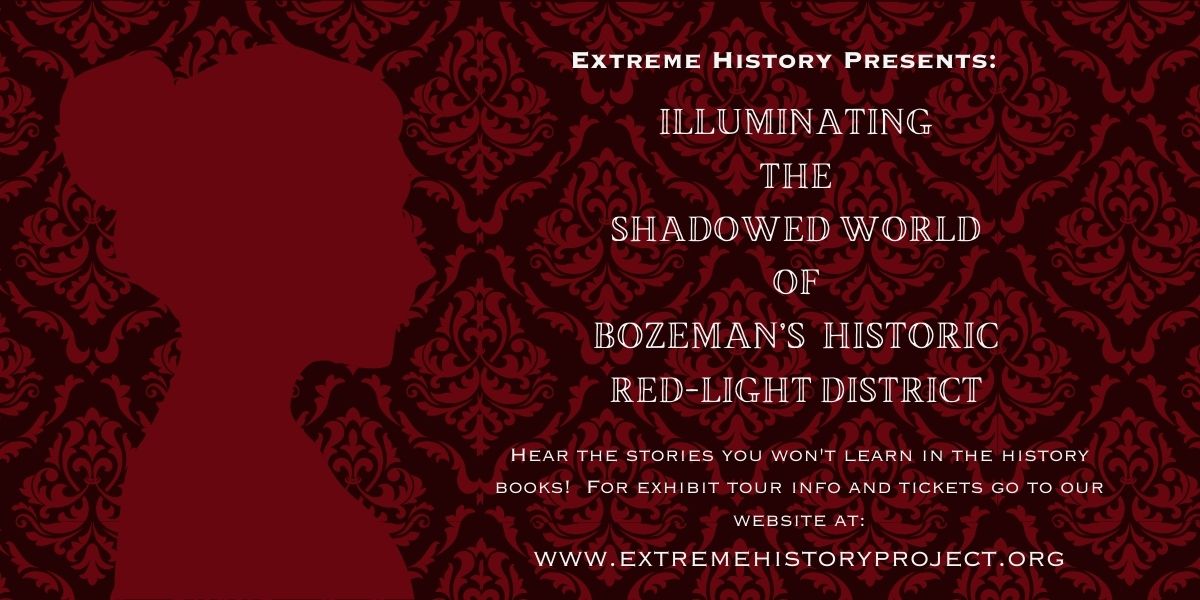
We’re excited to announce that The Extreme History Project has a new exhibit, Illuminating the Shadowed World of Bozeman’s Historic Red-Light District! This exhibit is located within our historic building (located at 234 E. Mendenhall in Bozeman, MT) which was built in 1891 specifically to be a brothel. We are offering exhibit tours on Tuesdays at 11am, Wednesdays at 1pm and Saturdays at 1pm through the Spring. CLICK HERE TO BOOK A TOUR!
You’re invited to explore a little known part of Bozeman’s history. The exhibit examines the hidden layers of the city’s “restricted district” that thrived from 1870s until 1918. You’ll learn about the lives and stories of two district madams, Lizzie Woods and Libbie Hayes and how they navigated the legalities, social stigmas and moralities of their business. You’ll learn too about the harsh realities these women lived with including drug addiction, violence and early death due to overdose, disease or suicide. Adding a rich cultural dimension to the narrative is the Chinese community’s connection to the district. This exhibit promises you a thought-provoking journey, shedding a new light on those who lived and worked in the shadows of Bozeman’s red-light district.
The tour is one-hour long and takes place within the Extreme History building. The tour will focus on the exhibit and building history. Hope you can join us! CLICK HERE TO BOOK A TOUR.
A BIG thank you to our exhibit sponsors including: Sally and Bob Beles, Erotique, Bridgercare, Treeline Coffee Roasters, Montana State University Women’s Center, Wild Crumb, and the Gallatin History Museum.
We’re excited to announce that The Extreme History Project has a new exhibit opening Saturday, February 10th called, Illuminating the Shadowed World of Bozeman’s Historic Red-Light District! This exhibit is located within our historic building (located at 234 E. Mendenhall in Bozeman, MT) which was built in 1891 specifically to be a brothel. We are offering exhibit tours on Tuesdays at 11am, Wednesdays at 1pm and Saturdays at 1pm through the Spring. Click here to book at tour!
You’re invited to explore a little known part of Bozeman’s history. The exhibit examines the hidden layers of the city’s “restricted district” that thrived from 1870s until 1918. You’ll learn about the lives and stories of two district madams, Lizzie Woods and Libbie Hayes and how they navigated the legalities, social stigmas and moralities of their business. You’ll learn too about the harsh realities these women lived with including drug addiction, violence and early death due to overdose, disease or suicide. Adding a rich cultural dimension to the narrative is the Chinese community’s connection to the district. This exhibit promises you a thought-provoking journey, shedding a new light on those who lived and worked in the shadows of Bozeman’s red-light district.
The tour is one-hour long and takes place within the Extreme History building. The tour will focus on the exhibit and building history. Hope you can join us! Click here to book a tour.
A BIG thank you to our exhibit sponsors including: Sally and Bob Beles, Erotique, Bridgercare, Treeline Coffee Roasters, Montana State University Women’s Center, Wild Crumb, and the Gallatin History Museum.
We’re excited for 2024 and all the history it will hold! Here’s what’s coming up in the next couple of months. Hope you can join us for one or all of these events.
February 4, 2-4pm – Lino Block Printmaking Class with Kelly Hartman of Studio 308. Explore the art of Lino Block Printmaking at The Extreme History Project! Join us on February 4th from 2-4pm at 234 E. Mendenhall Street for a creative journey led by Kelly Hartman, owner of Studio 308. In this two-hour class, you’ll delve into the basics of lino block printing. Discover the magic of transferring a provided design, carving a stamp, and mastering various printing techniques. Craft your own unique vintage-inspired Valentines cards for your friends and family! This class is perfect for both beginners and those looking to enhance their printmaking skills. All materials provided. Registration required. Limited class size. Click here for more information and to register.
February 6 – Illuminating the Shadowed World of Bozeman’s Historic Red-Light District Exhibit Opening. Watch this space for more information coming soon!
February 7, 6pm – American Burial Ground: A New History of the Overland Trail. Montana State University’s Department of History and The Extreme History Project invite you to an evening with Sarah Keyes as she discusses her new book, American Burial Ground: A New History of the Overland Trail on February 7th at 6pm in the Procrastinator Theater in MSU’s Strand Union Building. Free and open to the public. Her book will be available for sale.
February 13, 1-3pm. Extreme History Stitch and Sew-ciety. Join the Extreme Stitch and Sew-ciety for tea, cookies, and conversation as we work on our personal projects. Bring your needlework projects including mending, embroidery, tapestry, cross stitch and more to work on. If you have anything that is a modern or vintage project to share, bring it along as well. Our one restriction is no glues and paints. Hope to see you there for an afternoon of merriment and camaraderie. At the Extreme History headquarters located at 234 E. Mendenhall Street in Downtown Bozeman.
We are very grateful to those who have given to our End of Year Campaign, we could not do any of this without your support! Your dollars help us provide you with quality history programming. We ask you to donate $25, $50, $100 or more to help us bring history to you in 2024.
Thanks in advance, we appreciate your support and depend on it!
Looking back on the year – Our historic walking tours, lecture series, publications, The Dirt on the Past podcast, presentations, workshops, online Book Club, and our documentary work covered a wide variety of topics meant to inform and provoke further thought and discussion.
Our Symbolism and Preservation Cemetery Workshop in Deer Lodge, MT co-hosted by the Foundation for Montana History and the Old Montana Prison Museum was a hit! Classroom discussions and presentations by notable experts preceded a tour and scavenger hunt held in the local cemetery. An After Life party hosted by the Longfellow Finnegan Riddle funeral home in Anaconda capped off the event.
Passionate volunteers started our Extreme Stitch and Sew-ciety which helped enhance our period appropriate costuming as we strutted in the Sweet Pea Parade and as our History After Dark “ghosts” told their stories.
Again this year, we were honored to collaborate with Indigenous Peoples’ Day Montana and screen the docuseries, Murder in Bighorn which focused on missing and murdered Indigenous women.
We’ve partnered with the Museum of the Rockies to expand our podcast, The Dirt on the Past to video using the Museum’s new studio space and featuring artifacts from the Museum’s collections. This is called The Dirt on the Past: Museum Edition
Looking forward to 2024 — We will continue to bring you all the programs and events you have come to love along with new and innovative programming, exhibits, and films!
We are working on the second and third episodes of our Emmy nominated, The Story of Us: The Women Who Shaped Montana, a film series that tells the stories of Montana’s historic women that will air on Montana PBS in 2024 and 2025.
We will install a new exhibit on Bozeman’s historic Red-Light District in our headquarters building in January so watch for that!
We will co-host another cemetery workshop – this year in Butte so stay tuned!
Our work in the area of historic preservation will remain a critical focus in light of the current city development with the hope of encouraging community discussion and participation.
And so much more . . . !
But, to do this work we need you. Please understand how much your participation in our events, your purchases in our Extreme History Gift Shop and used Book Shop and your donations mean to us. To put it plainly, without your support, The Extreme History Project would no longer exist.
Your support is what keeps our door open and our research and interpretation ongoing. Our pledge is to always strive to give you meaningful, relevant programming!
Thanks again for appreciating our work, being our champions and supporting us with your donations, we appreciate you!
By donating to The Extreme History Project today, you will help us continue our mission to bring history to the public in fun, engaging and relevant ways. If you enjoy our programming and appreciate our work in the community, we ask you support us with a gift of $20, $40 or $100. This would help us maintain our walking tours, lectures, podcast, workshops, book club, publications, research, and so much more!
As we like to say, History Isn’t Pretty, but it is important and history in the community is essential as it preserves and celebrates our unique traditions, shared experiences, and collective identity and fosters a sense of belonging to this place we call home.
Thank you for considering a gift to Extreme History today, we truly appreciate your support! With our sincere thanks, Crystal Alegria (Director) and Team Extreme
Learn the art of bookmark embroidery at “A Stitch in Time” class, where you’ll create beautiful bookmarks while enjoying a cozy atmosphere. Join The Extreme History Project and Kelly Hartman, owner of Studio 308, for a bookmark embroidery class. Unlock your creativity and craft your very own felt corner bookmark!
Date: November 29, 2023 Time: 6pm to 8pm Location: The Extreme History Project Headquarters located at 234 E. Mendenhall Street in Bozeman, MT
Discover the Art of Embroidery! In this engaging two-hour class, you’ll delve into the world of embroidery and create a delightful felt corner bookmark. This hands-on experience is perfect for beginners and crafting enthusiasts alike. Whether you want to make a unique holiday gift or add a personal touch to your reading nook, this class is for you. What’s Included:
Sunday, October 29 at 4pm. Join us for a stroll through historic Sunset Hills Cemetery with tour guide, Jessica Jones. Step back in time as you walk through this historic graveyard, learning about mysterious local legends, spooky folklore, and local history. Keep watch because you may catch a glimpse of a spirit or two, drifting through the headstones. Meet Jessica at the cemetery gates located at the south side of Lindley Park a few minutes before4pm on October 30. Space is limited so secure tickets early.
A Docuseries Screening of ‘Murder in Bighorn’ Episode One
With Filmmakers Ivan Macdonald and Ivy Macdonald Reception to follow
When: Thursday, October 19th at 5:30pm
Where: Hager Auditorium, Museum of the Rockies
Join us, along with producers Ivy and Ivan MacDonald to view a powerful portrait of tribal members and their communities within Big Horn County, Montana battling an epidemic of Missing and Murdered Indigenous Women (MMIW) that has been prevalent since colonization. The three-part docuseries examines the circumstances surrounding many of these cases, told solely through the perspectives of those involved: Native families, Native journalists, and local law enforcement officers.
Thank you to our sponsors:
The City of Bozeman
Bozeman Health
The Museum of the Rockies
MSU Earth Sciences Department
MSU School of Film and Photography
Mountain Time Arts
As always, this event is free and open to the public. We look forward to seeing you there!
Take a step back in time and meet the colorful characters who shaped Bozeman.
For ONE NIGHT only, The Extreme History Project is bringing such notables as Nelson Story, Lizzie Woods, and John Bozeman back from the grave to tell their stories. Hear about their exploits and learn about life in this area as Bozeman struggled to become a town.
Your self-guided journey will take you down Main and Mendenhall streets to meet “soiled doves,” salacious madams, mystic mediums, and other bold inhabitants of this western town. Tales of ghosts, murder and mayhem, frontier justice, brothels, and more will be told by our resurrected dead. This year’s tour will introduce some intriguing new cast members to delight you with their sagas.
This tour is offered Friday night, October 13th, at 7:00, 7:10, 7:20 and 7:30 pm. Tickets are $25.
Take a step back in time and meet the colorful characters who shaped Bozeman.
For ONE NIGHT only, The Extreme History Project is bringing such notables as Nelson Story, Lizzie Woods, and John Bozeman back from the grave to tell their stories. Hear about their exploits and learn about life in this area as Bozeman struggled to become a town.
Your self-guided journey will take you down Main and Mendenhall streets to meet “soiled doves,” salacious madams, mystic mediums, and other bold inhabitants of this western town. Tales of ghosts, murder and mayhem, frontier justice, brothels, and more will be told by our resurrected dead. This year’s tour will introduce some intriguing new cast members to delight you with their sagas.
This tour is offered Friday night, October 13th, at 7:00, 7:10, 7:20 and 7:30 pm. Tickets are $25.
Take a step back in time and meet the colorful characters who shaped Bozeman.
For ONE NIGHT only, The Extreme History Project is bringing such notables as Nelson Story, Lizzie Woods, and John Bozeman back from the grave to tell their stories. Hear about their exploits and learn about life in this area as Bozeman struggled to become a town.
Your self-guided journey will take you down Main and Mendenhall streets to meet “soiled doves,” salacious madams, mystic mediums, and other bold inhabitants of this western town. Tales of ghosts, murder and mayhem, frontier justice, brothels, and more will be told by our resurrected dead. This year’s tour will introduce some intriguing new cast members to delight you with their sagas.
This tour is offered Friday night, October 13th, at 7:00, 7:10, 7:20 and 7:30 pm. Tickets are $25.
Join us for a NEW Fred Willson tour with tour guide, Richard Brown on July 20 at 6pm. Richard has spent many years researching the life of Bozeman architect, Fred Willson. On this tour you will learn about Willson’s career and personal life by exploring some of Bozeman’s finest architectural gems on the South Side. Meet your tour guide at the Story Mansion located at 811 S. Willson Street. Register for the tour by clicking this link!
Join us in Deer Lodge, MT on June 27th from 9am to 4pm for the Cemetery History, Preservation, and Headstone Symbolism Workshop! CLICK HERE TO REGISTER FOR WORKSHOP
This workshop is hosted by The Extreme History Project , The Foundation for Montana History, and the Old Montana Prison Museum
Date/Time: June 27, 9am to 4pm
Location: Old Prison Museum Conference Center in Deer Lodge, MT
Registration:CLICK HERE TO REGISTER. Tickets are $67 which includes all registration fees, workshop materials, lunch and Ellen Baumler’s “The Life of the Afterlife in the Big Sky State: A History of Montana’s Cemeteries” published by Bison Books.
***Option to join us at 4:30 for the “Afterlife Party” and Mortuary Tour at Longfellow Finnegan Riddle Funeral Home in Anaconda, MT (+ $10, see add-on option at checkout).
Are you curious about the hidden meanings behind the symbols and imagery commonly found in cemeteries? Do you want to learn more about the fascinating history and cultural significance of cemeteries? During this workshop, you’ll have the opportunity to learn about the rich symbolism found on many cemetery monuments and headstones and how to preserve these important cultural artifacts for future generations. Led by expert guides and preservationists, you’ll explore a local cemetery and discover the hidden meanings behind the intricate carvings and inscriptions found on many headstones. You’ll also learn about the techniques and tools used to restore and preserve these historic markers, helping to ensure their longevity for years to come.
Whether you are a cemetery buff, a lover of art and architecture, or simply interested in preserving our cultural heritage, this workshop is perfect for you. Join us and unlock the mysteries of cemetery history and symbolism and connect with others who share your passion. The workshop will take place at the Old Prison Museum Conference Center in Deer Lodge, MT with the field portion taking place in the Hillcrest Cemetery. After a day of learning, join us at the Finnegan Riddle Funeral Home in Anaconda, for an “Afterlife Party” where light refreshments and drinks will be served!
A BIG Thank you you to our sponsors including: Axelson Funeral Services and Bison Books/University of Nebraska Press
Thursday June 8, 6pm – The Contrasting Styles of Fred Willson.A NEW TOUR with Fred Willson Expert, Richard Brown! Join us for an updated tour of Fred Willson designed residences on Bozeman’s South Side featuring Fred Willson’s own house and that of his parents, Emma and Lester Willson. Meet your guide, Richard Brown, at the Story Mansion, where the first story is already waiting to be told.
Thursday June 8, 6pm – The Contrasting Styles of Fred Willson.A NEW TOUR! Join us for an updated tour of Fred Willson designed residences on Bozeman’s South Side featuring Fred Willson’s own house and that of his parents, Emma and Lester Willson. Meet your guide, Richard Brown, at the Story Mansion, where the first story is already waiting to be told.
We’re excited to kick off another season of walking tours! We have some great guides this year and new stories! Join us for some exciting tours this month!
May 25 and 26, 6pm – (TOURS FULL) Hidden History: Rediscovering Bozeman Creek Historic Walking Tour. Bozeman Creek runs through the heart of Bozeman and has always been an integral waterway for people living in the area. Join The Extreme History Project, Mountain Time Arts, and the Bozeman Historic Preservation Advisory Group on a collaborative walking tour of this historic waterway. Each organization will tell you about Bozeman Creek through their lens. We will uncover the history and hydrology of this important waterway, along with the rich natural and cultural history of the creek. Our walking tour is suitable for all ages and fitness levels, and we’ll take breaks along the way to rest and enjoy the scenery. So whether you’re a nature lover, history buff, or just looking for a peaceful and rejuvenating experience, our Bozeman Creek walking tour is the perfect way to spend a spring evening. Meet your tour guide at the City Hall building located at 121 N. Rouse Avenue. Free but registration required by clicking this link.
(Special Guests Tour!) SaturdayMay 27, 1pm and 3pm – Where in Bozeman! A Walking Tour of Unique and Hidden Architectural Gems with Paul Stouffer and Susan Anderegg. Every day people walk by features in downtown Bozeman without noticing them, visual white noise that doesn’t get even a second glance. Yet these things can tell us something about the history of where we live, things worth remembering, and maybe even saving. Join Where in Bozeman authors Susan Anderegg and Paul Stouffer on a walk around downtown as they point out many of the unique, hidden features highlighted in their book, while sharing the stories and historical significance behind them. You might be surprised and have some fun discovering new things, while gaining an appreciation for what is around us every day and what it might teach us about this great place. Each tour participant will also receive a copy of the book (for an additional charge) containing Susan’s rich, detailed photography accompanied by Paul’s written narrative. For tickets click here for 1pm tour and here for 3pm tour.
Join us for some exciting events coming up this month!
May 17, 6pm – Join Extreme History Director, Crystal Alegria, at The City of Bozeman Historic Advisory Board (HPAB) Meeting where she’ll do a short presentation on the history of Bozeman’s Black community. The meeting starts at 6:00pm and is located in the City Commission chambers at City Hall, 121 N. Rouse Avenue.
May 18, 6pm – Scott Carpenter will present, Westgate Village: Bozeman’s First Shopping Center and Contribution to Mid-Century Architecture. Westgate Village Shopping Center was designed by renowned Bozeman architect, Hugo Eck, and was built as Bozeman’s first multi-unit shopping center in 1957.This lecture will present an analysis of the architectural design and significance of the building along with the history of Hugo Eck and the development of other mid-century architecture and later shopping centers in Bozeman. Join us for this presentation at The Museum of the Rockies at 6pm.
May 25, 6pm – Hidden History: Rediscovering Bozeman Creek Historic Walking Tour. Bozeman Creek runs through the heart of Bozeman and has always been an integral waterway for people living in the area. Join The Extreme History Project, Mountain Time Arts, and the Bozeman Historic Preservation Advisory Group on a collaborative walking tour of this historic waterway. Each organization will tell you about Bozeman Creek through their lens. We will uncover the history and hydrology of this important waterway, along with the rich natural and cultural history of the creek. Our walking tour is suitable for all ages and fitness levels, and we’ll take breaks along the way to rest and enjoy the scenery. So whether you’re a nature lover, history buff, or just looking for a peaceful and rejuvenating experience, our Bozeman Creek walking tour is the perfect way to spend a spring evening. Meet your tour guide at the City Hall building located at 121 N. Rouse Avenue. Free but registration required by clicking this link.
May 26, 6pm – Hidden History: Rediscovering Bozeman Creek Historic Walking Tour. Bozeman Creek runs through the heart of Bozeman and has always been an integral waterway for people living in the area. Join The Extreme History Project, Mountain Time Arts, and the Bozeman Historic Preservation Advisory Group on a collaborative walking tour of this historic waterway. Each organization will tell you about Bozeman Creek through their lens. We will uncover the history and hydrology of this important waterway, along with the rich natural and cultural history of the creek. Our walking tour is suitable for all ages and fitness levels, and we’ll take breaks along the way to rest and enjoy the scenery. So whether you’re a nature lover, history buff, or just looking for a peaceful and rejuvenating experience, our Bozeman Creek walking tour is the perfect way to spend a spring evening. Meet your tour guide at the City Hall building located at 121 N. Rouse Avenue. Free but registration required by clicking this link.
May 27, 1pm and 3pm – Where in Bozeman! A Walking Tour of Unique and Hidden Architectural Gems. Every day people walk by features in downtown Bozeman without noticing them, visual white noise that doesn’t get even a second glance. Yet these things can tell us something about the history of where we live, things worth remembering, and maybe even saving. Join Where in Bozeman authors Susan Anderegg and Paul Stouffer on a walk around downtown as they point out many of the unique, hidden features highlighted in their book, while sharing the stories and historical significance behind them. You might be surprised and have some fun discovering new things, while gaining an appreciation for what is around us every day and what it might teach us about this great place. Each tour participant will also receive a copy of the book (for an additional charge) containing Susan’s rich, detailed photography accompanied by Paul’s written narrative. For tickets click here for 1pm tour and here for 3pm tour.
May 31, 6:30pm – Preservation & Legacy Awards. Join The City of Bozeman Historic Preservation Advisory Board for The Bozeman Historic Preservation & Legacy Awards Ceremony. The Awards will take place on Wednesday, May 31 at the Bozeman Event Space (14 S. Tracy) from 6:30-8:30pm.
Give Big Gallatin Valley starts today! Please consider adding The Extreme History Project to your giving list this year. Click here to donate!
Today (Thursday May 4) you have the opportunity to double your donation thanks to our wonderful Extreme History Board of Directors! They are matching all gifts up to $1,200!
Tomorrow (Friday May 5) Join us at MOKA Boutique (36 W. Main) for our donor lounge from 11am to 6pm for mini historic walking tours of Downtown Bozeman. (See walking tour schedule below). All tours are free but we encourage a Give Big donation to The Extreme History Project. MOKA Boutique is matching up to $2,000 of walking tour donations! You can donate online at GiveBigGV.org or at the time of the tour with cash, check, or venmo! No need to register for tours, just show up and enjoy!
At The Extreme History Project, we love history and believe it is crucial to know and understand our collective history to better understand ourselves and the community in which we live. Please consider adding Extreme History to your list of donations and Give Big to history because HISTORY MATTERS!
It’s that time of year again, time to Give Big on May 4 & 5, 2023! Please consider adding The Extreme History Project to your giving list this year. Join us at our Donor Lounge at MOKA Boutique (36 W. Main) on May 5th for mini historic walking tours of Downtown Bozeman. (See walking tour schedule below). All tours are free but we encourage a Give Big donation to The Extreme History Project. MOKA Boutique is matching up to $2,000 for walking tour donations! And . . . our Extreme History Project Board of Directors is matching up to $1,200 in donations! So donate early to have your support doubled!
Together we can tell the story of our place, not only the traditional narrative but one that includes all the voices in the story. We ask for your support and we thank you for giving big to history. It’s easy, on May 4 & 5, just follow this link to GIVE BIG!. Thank you for your support of The Extreme History Project and Give Big Gallatin Valley.
The Extreme History Project Headquarters is open on Saturdays from noon to 5pm. Come in and browse our Used Book Shop. In celebration of Women’s History Month, we have a large selection of books dedicated to Women’s history in our used Book Shop, but also new books as well. We are located in historic Downtown Bozeman, MT at 234 E. Mendenhall Street.
March 14, 1pm at The Extreme History Project Headquarters – Unfinished Handcrafts Club. Do you have unfinished handcraft projects sitting around the house? Need a little help to finish them? Or maybe just someone to keep you motivated to finish? On Tuesday, March 14, 1-3pm, we will be launching a club for Unfinished Handcrafts and their owners. At the first meeting, we will decide organizational details such as meeting times and group name. Any sort of textile project that does not require machinery is welcome – hand quilting, needlework, hand sewing, rug punching or hooking, embroidery, knitting, or crocheting, etc. Projects may be historical or modern. Members are encouraged to bring a project for “show-and-tell.” Meet at The Extreme History Project headquarters located at 234 E. Mendenhall Street in Bozeman, MT at 1pm.
March 23, 6pm at The Museum of the Rockies – John Russell will present, The Gallatin Valley Female Seminary.
Religious academies, designed to counter vices like saloons and brothels prevalent on the frontier, were established throughout the American west in the 1870s. One was the Gallatin Valley Female Seminary, administered by the Presbyterian church “to give Christian education to the young people of Bozeman.” John Russell will discuss the history of the Seminary, and touch upon some other private education school efforts in the Bozeman area. John C. Russell received his Bachelor of Arts degree in history from Montana State University in 1978. He has worked as a broadcast journalist, and most recently as director of the Gallatin (County) Historical Society. John’s book on Bozeman pioneer Nelson Story, “Treasure State Tycoon, Nelson Story and the Making of Montana” was published in 2018 by the Montana Historical Society and is available at local bookstores. This event is free and open to the public and sponsored by the MSU Women’s Center and the Yellowstone Theological Institute.
Heartfelt thanks to our community and family of supporters for helping make 2022 a red letter year for us — or should we say, a red carpet year!
We hope to do it all again, and more in 2023 but we need your help to make that happen. Please consider The Extreme History Project during your end-of-year giving. A gift of $25, $50 or more would help us with our mission to Make History Relevant. Click here to donate.
To recap 2022, we launched our lecture series in January with an on-line presentation outlining the whys, wherefores, and impact of historic preservation. Subsequent lectures, coupled with our Dirt on the Past podcasts, covered a wide spectrum of topical subjects, such as Indian Boarding schools, Genetic History of the Americas, and Montana Highway Tales.
Our book club kicked off in February with a timely and relevant book entitled Clara’s Journal and the Tale of Two Pandemics. Revolving around the theme of women’s lives in the American west, our bimonthly book selections stimulated spirited discussions among participants. Throughout the year, we hosted authors Molly Rozum and Laura Arata for in-house book readings and signings, co-sponsored Michael Johnson’s talk and signing of his new book, A Black Women’s West, capping off with a virtual presentation featuring New York Times bestseller and award winning author Jane Kirkpatrick.
Partnering with several other organizations, including MSU’s Ivan Doig Center, we celebrated Women’s History month in March with a variety of pertinent presentations and book readings, such Birthing the West by Jennifer Hill, focusing on the impact of women’s efforts in fomenting change in their communities.
Our walking tour guides were back in full swing this summer entertaining residents and visitors with the engaging histories of the places and people who shaped Bozeman. Our new Galligator Trail walking tour, exploring the old railway line that once ran to Gallatin Gateway, proved to be a big hit. We offered a number of special tours as well. Authors of the book Where in Bozeman led a tour pointing out many unique and hidden features highlighted in their book. We cohosted tours for both the Lehrkind and Story family descendants.
August found us strutting our stuff at the Sweet Pea parade. Dressed in period attire as notable Bozeman historic figures, we braved the soggy weather to stroll down Main Street tossing candy and meeting and greeting the spectators.
And rolling out the red carpet, The Story of Us: The Women Who Shaped Montana, a documentary highlighting the accomplishments of four women who helped shape Montana, premiered in Helena with additional showings in Bozeman, Butte, Missoula and Virginia City. Montana PBS also included this film, a collaboration between North by Northwest and The Extreme History Project, as part of their Thanksgiving day programming. Plans for episodes 2 & 3 of the documentary are already in the works!
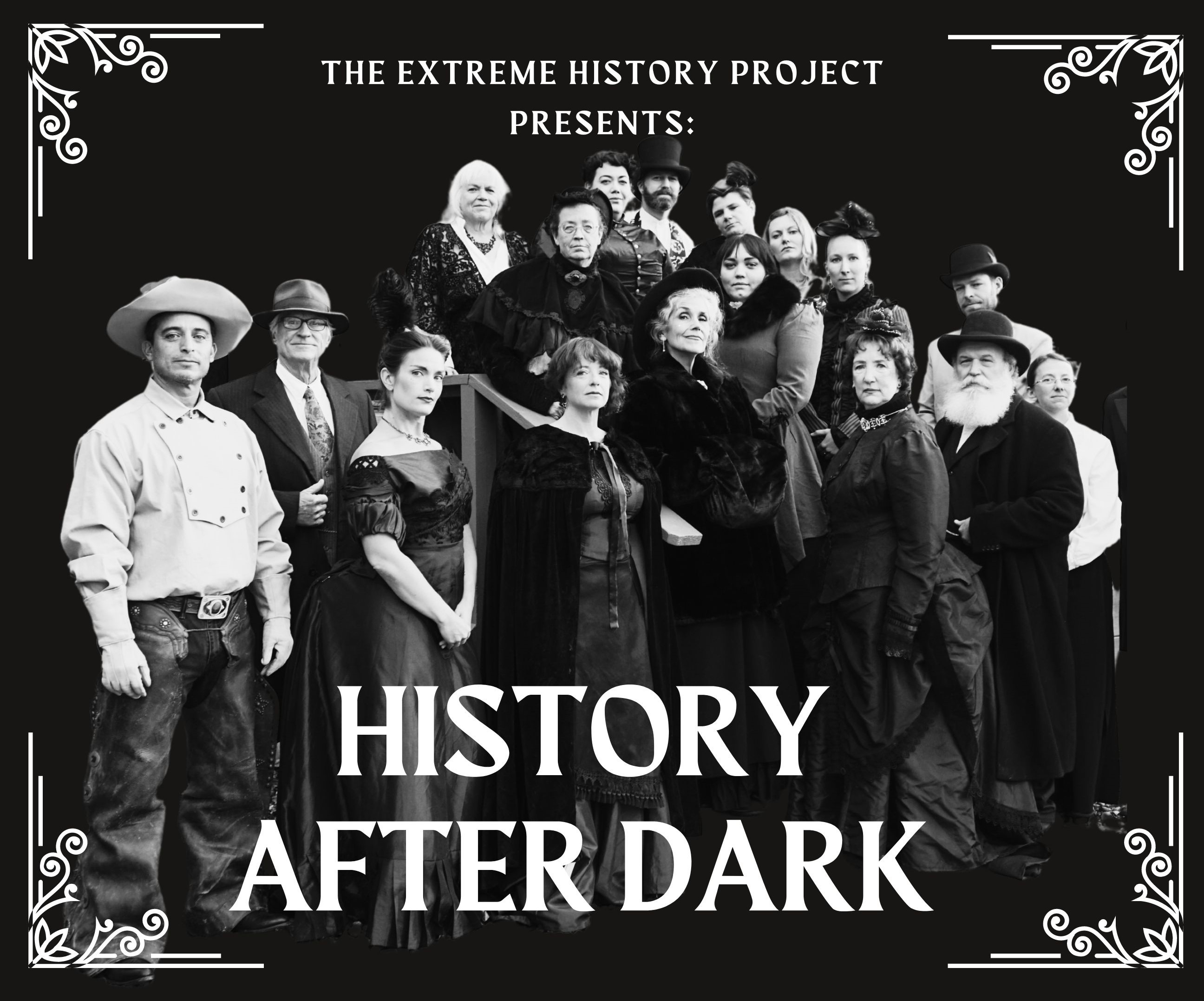
After a two year hiatus due to Covid, we raised the dead and, as our Halloween special, held our ever popular History After Dark event. The “ghosts” of John Bozeman, Nelson and Ellen Story, madam Lizzie Woods and a myriad of other characters recounted their colorful and sometimes tragic lives.
Other projects included two workshops, Cemetery History and Symbolism and an instructional workshop put together for the Bozeman Preservation Advisory Board on how to document historical properties. We have been providing research assistance to the city of Bozeman in an ongoing survey of historical homes and sites for several years.
All of this is in addition to maintaining our in house gift shop and used book shop and hosting special events like our puzzle exchanges and our annual Victorian Holiday Open House.
As you can see, we are a small non-profit with a big agenda and even bigger goals. We have been able to accomplish our mission of bringing history to the community in large part because of your generous donations and support. As they say, “it takes a village.” Every dollar given is put into research and resources needed to create fresh, exciting, pertinent programming. Thank you for being the fuel that drives us forward and inspires us to achieve more every year. Thank you in advance for your continued support. Click here to donate.
We have some fun events coming up this holiday season
November 24 – The film, The Story of Us: The Women Who Shaped Montana airs on MontanaPBS Thursday (Thanksgiving) at 7pm. This short film follows the inspiring stories of three Montana women, Sarah Bickford, Maggie Smith Hathaway and Susie Walking Bear Yellowtail. Tune-in and learn how they helped enrich and shape the Montana we know today. Extreme History collaborated on the creation of this film with funding provided by The Greater Montana Foundation, Humanities Montana, The Montana History Foundation and the Montana Film Office.
November 26 – Small Business Saturday Sale at The Extreme History Project headquarters. All gift shop items, new books, and used books will be 10% off! Come on down to shop for all the history lovers on your list. We are located at 234 E. Mendenhall Street in Bozeman and we’ll be open from noon to 5pm.
November 29 – #GivingTuesday! Our mission is to make history relevant but we can’t do that without your help! This Giving Tuesday we ask for your support. We are a small non-profit with a big agenda and even bigger goals. We have been able to accomplish our mission of bringing history to the community in large part because of your generous donations and support. As they say, “it takes a village.” Every dollar given goes into research and resources needed to create fresh, exciting, pertinent programming. Thank you for being the fuel that drives us forward and inspires us to achieve more every year. Click here to donate!
December 3 – Extreme History Holiday Market and Open House! Join us for cocoa, hot apple cider and sweet treats during the Bozeman Christmas Stroll from 4:30 to 7:30. Our gift shop and used book shop will be open for your shopping pleasure. Find a gift for the history lover in your family, or something just for you! We are located at 234 E. Mendenhall Street in Bozeman.
We hope to see you at one of these events this holiday season! We are grateful for our wonderful community (that’s you), and we look forward to celebrating this holiday season with you!
Do you love to put together puzzles during the holidays – we sure do! If you have puzzles you would like to exchange, come on in to The Extreme History Headquarters (234 E. Mendenhall in Bozeman, MT) and drop off your gently used puzzles and pick out a new one for free! Our used Book Shop and Extreme History Gift Shop will be open during that time as well so you can start your holiday shopping early. We look forward to seeing you there! Saturday, November 5 from 10am to 5pm. we are located at 234 E. Mendenhall in Bozeman, MT.
Sunday, October 30 at 4pm. Join us for a stroll through historic Sunset Hills Cemetery with tour guide, Jessica Jones. Step back in time as you walk through this historic graveyard, learning about mysterious local legends, spooky folklore, and local history. Keep watch because you may catch a glimpse of a spirit or two, drifting through the headstones. Meet Jessica at the cemetery gates located at the south side of Lindley Park a few minutes before4pm on October 30. Space is limited so secure tickets early.To purchase tickets click here.
Encounter the ghosts of Halloween past on this self-guided tour of downtown Bozeman where you’ll meet notable people from Bozeman’s past. Ready to encounter the ghosts of Halloween Past? Take a step back in time and meet the colorful characters who shaped Bozeman. For one night only, The Extreme History Project is bringing such notables as Nelson Story, Lizzie Woods, and John Bozeman back from the grave to tell their stories. Hear about their exploits and learn about life in this area as Bozeman struggled to become a town. Your self-guided journey will take you down Main and Mendenhall streets to meet “soiled doves,” salacious madams, mystic mediums, and other bold inhabitants of this western town. Tales of ghosts, murder and mayhem, frontier justice, brothels, and more will be told by our resurrected dead. This year’s tour will introduce some intriguing new cast members to delight you with their sagas. This tour is offered Friday night, October 14th, at 7:00, 7:10, 7:20 and 7:30 pm. Tickets are $20.
Join us for a presentation with John Russell at the Museum of the Rockies at 6pm!
September 15 – George B. Herendeen – Custer Scout from Bozeman. In-person event at The Museum of the Rockies. 6pm
George Herendeen (1846-1919) was a Bozeman pioneer, cowboy, prospector, explorer, and a lead scout for George Custer’s 7th Cavalry at the Little Big Horn. In the aftermath of Custer’s defeat, accusations flew against his two subordinates, Captain Frederick Benteen and Major Marcus Reno, accusing them of cowardice and failure to obey orders. These two army officers became the scapegoats for Custer’s annihilation. In 1879, the U.S. army held a court of inquiry for Major Reno that would include testimony from dozens of survivors of the Last Stand, including Herendeen. Local historian John Russell will look at Herendeen’s testimony and how it was interpreted by both Custer supporters and detractors.
This 40-minute documentary examines the extraordinary lives of four women who came from humble beginnings and achieved incredible feats despite obstacles and tragedies along the way.
Women have always played important developmental roles in the history of Montana. The stories of Sarah Bickford, Rose Hum Lee, Maggie Smith Hathaway, and Susie Walking Bear Yellowtail are individually unique, but all feature a strong Montana woman determined to do better and be better. It’s time to celebrate their achievements, understand their faults, and applaud the spirits that drove them to help shape Montana.
Join us at The Museum of the Rockies in Bozeman, MT at 6pm on September 7th. This screening is free and open to the public.
There will be a question/answer session after the screening with producers Kimberly Hogberg and Crystal Alegria, and with content expert,Diane Sands.
This is a production of North by Northwest and The Extreme History Project with support from The Montana History Foundation, Humanities Montana, The Montana Film Office, and the Greater Montana Foundation.
Can’t believe The Extreme History Project summer walking tour season is almost done . . . but it’s not over yet! Here is what we have for you this week!
Tuesday, August 30 at 6pm. We are offering our NEW TOUR, Along the Gallagator for the last time this season. Meet your tour guide at the south end of the Bozeman Public Library Parking Lot. Click here for more information and to purchase tickets.
Sunday, 4pm. Ghosts of Bozeman’s Past: Bozeman’s Historic Sunset Hills Cemetery. Meet your tour guide at the entrance to Sunset Hills located at the south side of Lindley Park. Click here for more information and to purchase tickets.
To purchase tickets for a tour, click on the tour below or give us a call at 406-220-2678, or send us an email at info@extremehistoryproject.org. Tours are $15, $13 for seniors, members and students, kids 12 and under are free!
Your donation of any amount will help us provide you with high quality history programming like our lecture series, podcast, walking tours, workshops, book club, book-signing events, and so much more!
For GIVE BIG this year, donors that give $150 and above will receive two tickets to the debut of our newest historic walking tour “Along the Gallagator,” a tour featuring the history of the railway and now linear walking trail. We won’t only cover railway history but the history of south Tracy Street as well! This tour will take place on June 7, at 6pm.
And . . . you can double your donation because we have two matching gifts, one from an anonymous long-time supporter of Extreme History for $500 and another from The Extreme History Board of Directors for $1,950.
Your donation will help us continue this work in our community. Thanks in advance for your support, we GREATLY appreciate it! Click here to donate.
Thank you for Giving Big to The Extreme History Project, we appreciate your support.
Join the Extreme History Project and Montana State University’s Ivan Doig Center for the Study of the Lands & Peoples of the North American West for an evening with Mark Johnson at the Museum of the Rockies in Bozeman, MT on May 17 at 6pm for this in-person event. Johnson will discuss his new book, “The Middle Kingdom under the Big Sky: A History of the Chinese Experience in Montana.” Books will be available for purchase and signing at the event.
About “The Middle Kingdom under the Big Sky”: From the earliest days of non-Native settlement of Montana, Chinese pioneers played a key role in the region’s development. Yet this population, so crucial to Montana’s development, remains underrepresented in historical accounts. The Middle Kingdom under the Big Sky recovers the stories of Montana’s Chinese population in their own words and deepens understanding of Chinese experiences in Montana with a global lens. Mark Johnson has mined several large collections of primary documents left by Chinese pioneers, rendered in English here for the first time through a transnational translation project. These collections, spanning the 1880s-1950s, provide insight into the pressures the Chinese community faced—from family members back in China and from non-Chinese Montanans—as economic and cultural disturbances complicated acceptance of Chinese residents in the state. Through their own voices The Middle Kingdom under the Big Sky reveals the agency of Chinese Montanans in the history of the American West and China.
Mark Johnson is an assistant professor with the University of Notre Dame whose research focuses on telling the history of Chinese communities in Montana in their own words and through a global lens.
March is Women’s History Month! At Extreme History, we highlight women’s history all year long – but it’s always nice to have a month dedicated to the ladies. This month we are partnering with many organizations to bring women’s history to you!
On March 14th at 6:30pm, our Director, Crystal Alegria, will present Activists and Advocates: A History of Bozeman Women Creating Change for the Bozeman Public Library virtually, click here for more information and the Zoom link.
On March 28, Extreme History is partnering with MSU’s Doig Center and American Studies Department to bring you Birthing The West: Mothers and Midwives in the Rockies and Plains, a book signing with Jennifer Hill. This in-person event will be held at Montana State University’s Leigh Lounge at 4pm. Reception to follow. We hope you can join us for one or all of these events that are all free and open to the public!
Our Extreme History Used Book Shop has a large section on women’s history so come in and pick up a book (or two, or three) to read during women’s history month.
We encourage you to learn about this history of women in your community and your own family, these histories are often significant and monumental. By weaving women’s history back into the historical narrative, we are making stories richer and more diverse.
We’ve decided to keep our lecture series virtual for the time-being so our January through May lectures will be online via Zoom.
January 20 – 6pm – Scott Carpenter and Lesley Gilmore – “Don’t Know What You’ve Got ‘til it’s Gone: Historic Preservation in Bozeman”(with appreciation and apologies to Joni Mitchell). To watch this presentation click here.
This informal, but lively presentation will examine Bozeman’s unique historical context and irreplaceable collection of historic buildings. The discussion will present a brief summary of Bozeman’s history, along with the definitions, facts and benefits of historic preservation. We will also examine the many rumors and misperceptions that precede, or derail preservation efforts. We will look at the importance of historic preservation to maintaining higher property values, providing the best opportunities for green energy and conservation versus demolition and new construction, and celebrate the positive aspects of maintaining a meaningful aesthetic and neighborhood appeal. We will also present ideas for how individual property owners can investigate the history of their properties, plan for effective renovation projects, and support historic preservation efforts in Bozeman.
Scott Carpenter is an archaeologist, historian, and architectural historian. He owns InteResources Planning, Inc., and has a professional career extending over 40 years in the private sector and the National Park Service. Scott is a recognized expert on the National Historic Preservation Act and various state and local regulations, tax credit programs, and preservation planning.
Lesley Gilmore is a historic preservation architect who’s passion for historic preservation is professional and personal, evidenced by her dedicated involvement in the Association for Preservation Technology, the AIA Historic Resources Committee, Preserve Montana, and the Extreme History Project.
As we come into the last month of 2021, we are grateful for many things, the top of the list being our Extreme History community (that’s you!).
We are also grateful that we were able to launch our 2021 walking tours and even add some revamped and new tours to the mix. We were excited to take to the streets for Bozeman’s Sweet Pea parade. Our flowery float was peopled with some of Bozeman’s most colorful historic figures and included a special tribute to raise awareness for the Indian Boarding Schools story. Our The Dirt on the Past podcast in which team members discuss a wide range of topics with notable experts garnered over seven thousand listens (and counting) worldwide. Furthering our mission for educational outreach, we continued offering our lecture seriesvia Zoom. Our online book (and wine) club also proved to be a community favorite. In June, Montana author Tom Rust was on hand to discuss and sign his latest book and in November, local author Kelly Hartman read from and signed copies of her new book. We assisted in the creation of a documentary called, The Story of Us (watch for the debut in early 2022) In addition to the ever expanding inventory of unique goodies in our Mendenhall Street office gift shop, we opened our new Extreme History Book Shop featuring specially curated used history books, covering a large variety of historical subjects.
While we have had our successes, we also have had our challenges. Several of our planned in-house events and our big fundraising program, History After Dark, were cancelled out of concern for community health safety. As is the struggle of all non-profits, The Extreme History Project needs outside funding to underwrite our mission. Bringing history to the community requires many hours of research, resources and logistical support. We have big ideas, but a small budget. Your donations are the fuel we need to keep us moving forward with pertinent content and fresh, exciting programming. Every dollar you can give brings us closer to fulfilling our goals for this upcoming year.
Extreme History Puzzle Exchange: November 13 from 3pm to 5pm – The Great Puzzle Exchange! Do you love to put together puzzles during the holidays – we sure do! If you have puzzles you would like to exchange, come on in to Extreme History Headquarters (234 E. Mendenhall) and drop off your gently used puzzles and pick out a new one for free!
A Book Reading/Signing Event: November 16 at 6pm – Murder & Mayhem in Gallatin County: A Book Reading/Signing with Kelly Hartman. At Extreme History we like to say History Isn’t Pretty, and that sums up Kelly’s new book. Quiet fields broken by gunfire, the splash of a body dropping into the Madison River, cries for help cut off into silence and the grim last words spoken on the gallows all color the bloody history of Gallatin County. Cut-and-dried murder charges, unsolved cases and questionable accusations all paint the picture of law enforcement in and around early Bozeman. From the gruesome to the mysterious, sordid accounts of robbery, crimes of passion and fatal self-defense fill the annals of the historic county jail. Gallatin History Museum curator Kelly Suzanne Hartman chronicles each tale, allowing the reader to follow along the path of the investigations and the pursuit for justice. Join us at Extreme History Headquarters (234 E. Mendenhall) on November 16 at 6pm for a book reading/signing event with Kelly Hartman. Masks are encouraged.
Gift and Book Shop Events: November 27 from 12pm to 5pm – Extreme History Book Shop Sale – Start your holiday shopping early and join us for Small Business Saturday and enjoy a buy one, get one of equal or lesser value sale on our specially curated used history books. At Extreme History Headquarters (234 E. Mendenhall).
December 4 from 3pm to 6pm – Join us for our annual Victorian Holiday Market where you can shop early for all the history-lovers in your family. Join us at Extreme History Headquarters for this annual open house event, visit with our board members, have a cup of hot chocolate and browse the unique offerings in our gift shop, the book shop and exhibits.
With Halloween on a Sunday this year, we thought it would be a great opportunity to do a walking tour through Bozeman’s historic Sunset Hills Cemetery on October 31 at 4pm! Join us for a stroll through historic Sunset Hills Cemetery on All Hallows’ Eve with tour guide, Jessica Jones. Step back in time as you walk through this historic graveyard, learning about mysterious local legends, spooky folklore, and local history. Keep watch because you may catch a glimpse of a spirit or two, drifting through the headstones. Meet Jessica at the cemetery gates located at the south side of Lindley Park a few minutes before 4pm. Space is limited so secure tickets early. For tickets click here.
We’re excited to offer a few more historic walking tours of Sunset Hills Cemetery on October 10th, 17th, and 24th at 4pm. Set atop a peaceful overlook, Bozeman’s historic Sunset Hills Cemetery offers a panoramic view of downtown while each evening’s sunset reflects the nature of its quiet inhabitants. The early residents of Bozeman laid their love ones to rest in this sanctified ground overlooking the town that their toil and labor helped establish. Bozeman’s early movers and shakers rest here along with others whose stories make up the town’s historical narrative. Join us for a tour of Sunset Hills Cemetery and learn the fascinating history of early Bozeman. Click here to reserve tickets.
Dear Friends, We are disappointed to announce that we are cancelling our History After Dark event, originally scheduled for October 15th, due to the rise in Gallatin Valley Covid cases. Our community is important to us and we want to do everything we can to keep everyone, including our Extreme History volunteers, safe and healthy. If you have already purchased a ticket, you will receive a refund. Thank you for your support and please look for our future events as the Covid situation stabilizes.
As the days get shorter and there is a touch of fall in the air – our thoughts at Extreme History turn to History After Dark! Join us for this self-guided walking tour that brings Bozeman’s past to life! On Friday, October 15, some of Bozeman’s notorious citizens will return from the grave to share their stories with the public. Participants will walk the dark streets of downtown Bozeman, hearing tales of horrific murders, gruesome hangings, and salacious madams from the mouths of the dead themselves. Tours will kick off at 7pm from The Extreme History Project headquarters located at 234 E. Mendenhall. Tickets are limited so purchase early! CLICK HERE TO SECURE A TICKET! For more information or questions, send us an email at info@extremehistoryproject.org!
Join us on Saturday, July 17 from noon to 5pm for the Grand Opening of The Extreme History Project Book Shop! Within the Extreme History headquarters, we have dedicated a room to used books that focus on history. We have a large selection of Montana and western history, along with some great historical fiction. Books range in price from $4 to $12. We are located at 234 E. Mendenhall. Stop by on Saturday, July 17th and find some summer history reading!
It is that time of year again, time to Give Big! Please consider adding The Extreme History Project to your giving list this year.
We need history and a connection to our community’s past now more than ever. By understanding where we’ve been, we can better understand what’s happening today. Help us continue our mission to make history relevant. Contributions big and small are welcome and go a long way in helping us to provide you with quality historical programming, bringing history alive.
Together we can tell the story of our place, not only the traditional narrative but one that includes all the voices in the story. We ask for your support and we thank you for giving big to history. It’s easy, just follow this link. Thank you for your support of The Extreme History Project and Give Big.
Have you had a chance to check out our new podcast, The Dirt on the Past? If not, be sure to have a listen and subscribe wherever you find your podcasts. If you would like to listen from our website, click here. We interview archaeologists, historians, and other heritage professionals about their research and why it matters today. Thanks and hope you can join us for more . . . Dirt on the Past!
Like everyone, The Extreme History Project has been faced with many challenges because of Covid-19. Unable to provide our usual full range of programming due to safety concerns, we made adjustments to our walking tours in keeping with mandated restrictions, continued to provide our lecture series via Zoom instead of in person, and introduced several new and informative events to support our educational mission.
This year the nation commemorated the 100th anniversary of the ratification of the 19th Amendment giving women voting rights. To highlight this pivotal legislation, we displayed an exhibit detailing the suffrage movement, curated another exhibit providing a snapshot of historic reproductive and contraceptive practices during the 19th century west, and facilitated a committee called The 19th Amendment: Expanding the Arc of the Suffrage Story, a coordinated effort of individuals and organizations in the Gallatin Valley who worked to change the narrative of the women’s suffrage story including the histories of indigenous women and women of color. Many of our lecture series presentations this year also dealt with women’s issues and women’s place in the historical narrative.
To further our outreach and maintain a dialog with our community, Extreme History started a Book Club with book selections relevant to the Montana experience. Supplementing that effort, we launched The Dirt on the Past podcast in which experts in a variety of fields discuss their research.
2020 has proven to be especially memorable and we have been witness to many firsts. What we do now becomes the history of future generations and informs our actions affecting that future. The Extreme History Project’s goal is to seek out and examine that history — good, bad or ugly — and share that knowledge with you. Knowledge is power, as is truth.
We are gearing up for 2021 and have been brainstorming new, exciting projects. To that end, we do ask for your help in achieving our mission. Your donations enable us to keep our research ongoing and our programming pertinent. Every dollar provides the vital resources needed to continue our service. Sometimes it really does take a village!
Learn how to uncover the history of a house or historic building! Every building has a history and a story to tell. In this virtual workshop, you’ll learn how to uncover the history of a house or historic building, whether it is 50 years old or 150 years old. Experts will share their knowledge on research techniques and you’ll be instructed on how to read Sanborn maps, research city directories, uncover information in deed records, and much more! Join us for this virtual workshop from 10am to 3pm on Saturday, November 7th via zoom. The cost of this workshop is $45 which includes a packet of resources and information which you will receive via email. Hope you can join us for this interactive and engaging workshop! To purchase a ticket, click here. For questions please contact us at info@extremehistoryproject.org.
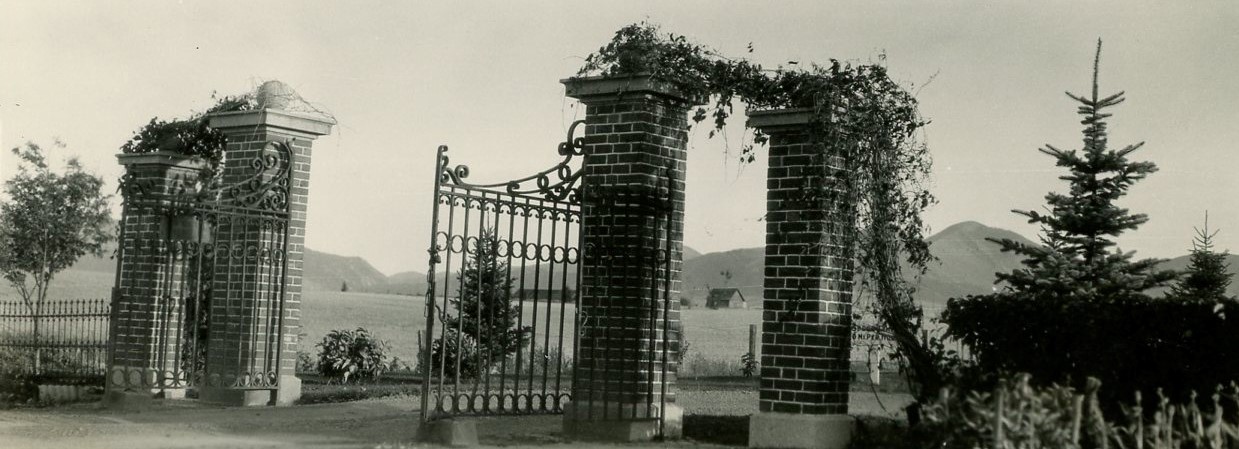
Entrance Gate at Sunset Hills Cemetery – Photo courtesy The Gallatin History Museum
Sunset Hills Cemetery by Crystal Alegria
Cemeteries are places of solace and beauty, they are places you go to contemplate, grieve, and appreciate. As a historian, I go to these places for all those reasons but also to learn about the people who came before, those who built the community I now live in and call home. The values of a community can be seen in the cemetery, on the headstones and in the monuments, in the layout, and engraved on the stones. You can see and understand what people held sacred through epitaphs and inscriptions. Cemeteries are like outdoor museums. The headstones hold secrets contained in the symbolism etched on their stone surfaces. If we take the time to look and learn, we come away from our local cemeteries with knowledge about the people themselves, but also the community values they shared. (photo of gate)
Our local cemetery, Sunset Hills, is located on a hill over-looking the town of Bozeman, Montana. Today it is a beautiful park-like cemetery with a multitude of trees, lilacs blooming in the spring, formal boulevards, and manicured lawns. It started off as a convenient spot, atop a hill to bury Bozeman’s dead with little thought to the beauty and tranquility of the location.
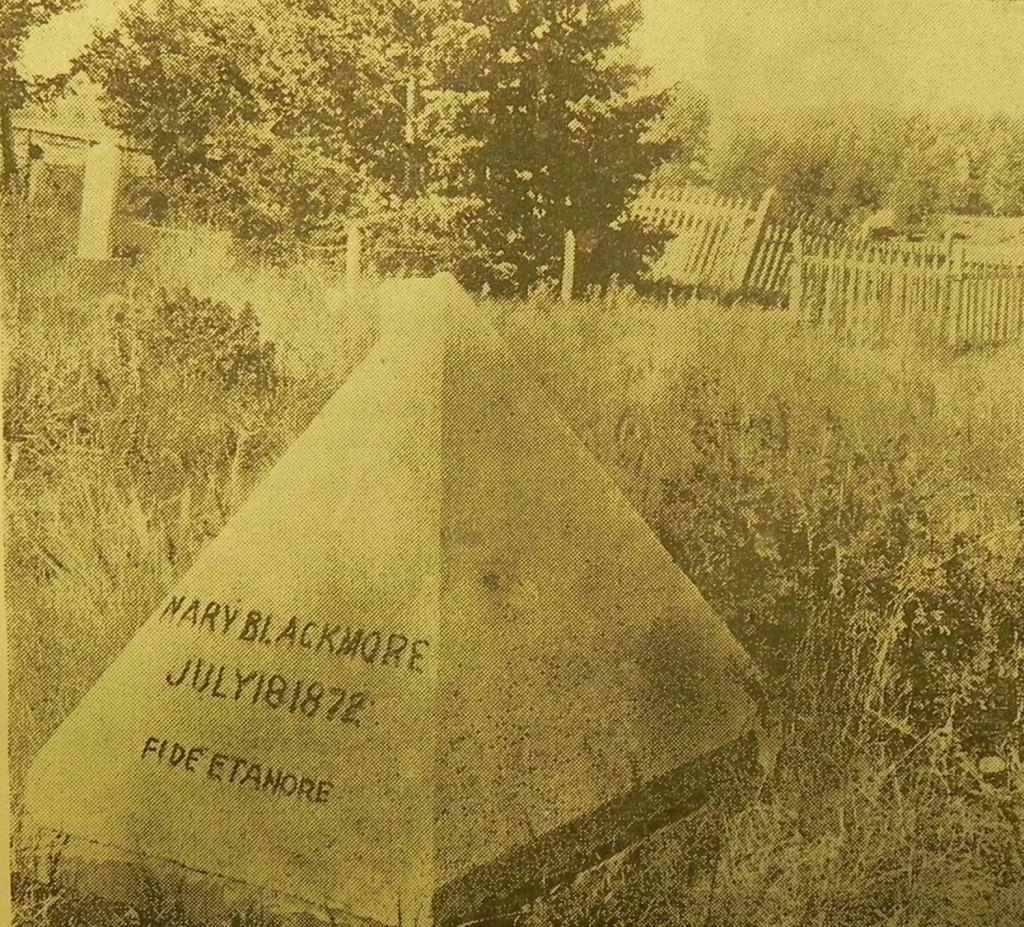
There are early newspaper accounts that mention the cemetery as a stark and barren hill, with cattle grazing amongst the tombstones, rubbing up against them and knocking them over. An article from the Avant Courier newspaper in 1879 decried the need for a fence saying, “. . . the final resting place of the dead remains . . . unprotected from the bands of horses and cattle running at large on the adjoining foot hills.”[1] It goes on to say, “We are aware that several family lots are properly enclosed by neat picket fences but the condition of the remainder, which is by far the greater portion of the grounds, is little more than a standing disgrace to the people of Bozeman.”[2] As mentioned, some early graves had white picket fences to prevent destruction from wildlife and cows. A photo published in The Anaconda Standard from 1901 shows these picket fences surrounding graves. It also shows the grass as un-mowed and tall. It has a wild beauty to it but from our 21st century eyes it is shocking to see a cemetery so unmanicured.
The Anaconda Standard Newspaper shows the grave of Mary Blackmore, along with other graves surrounded by picket fences.
In the early years there was no irrigation in the cemetery. People would bring water up the hill in buckets and pales to water the few plants and flowers that marked their ancestor’s graves. There is an account in 1891 from The Bozeman Daily Chronicle that comments on the view “Seen From the Hill.” The article describes the sleepy town of Bozeman on a May day in 1891, “Farmers dotting the landscape for miles. They seem to be very busy putting in crops. . . Several Bozemanites arrayed in summer suits and straw hats. The dust flying over the city and an old sprinkler going to decay. The schoolboy playing “hookey” and trapping gophers on the Ellis reservation. People carrying water to the cemetery in buckets, tin cans, etc.”[3]
Cemeteries are also a place to self-reflect, to think about your own life and those who came before. If you would like an introduction to Bozeman’s historic section of Sunset Hills Cemetery, please join us for a walking tour this month. We are offering tours on October 4 and October 11 at 4pm. Due to small tour size we suggest you register by clicking here!
One of our favorite cemetery books at Extreme History is Spoon River Anthology by Edgar Lee Masters. Here is a small piece from this classic.
Where are Elmer, Herman, Bert, Tom and Charley,
The weak of will, the strong of arm, the clown, the boozer, the fighter?
All, all are sleeping on the hill.
One passed in a fever,
One was burned in a mine,
One was killed in a brawl,
One died in a jail,
One fell from a bridge toiling for children and wife —
All, all are sleeping, sleeping, sleeping on the hill.
Where are Ella, Kate, Mag, Lizzie and Edith,
The tender heart, the simple soul, the loud, the proud, the happy one? —
All, all are sleeping on the hill.
One died in shameful child-birth,
One of a thwarted love,
One at the hands of a brute in a brothel,
One of a broken pride, in the search for heart’s desire,
One after life in far-away London and Paris
Was brought to her little space by Ella and Kate and Mag —
All, all are sleeping, sleeping, sleeping on the hill.
Where are Uncle Isaac and Aunt Emily,
And old Towny Kincaid and Sevigne Houghton,
And Major Walker who had talked
With venerable men of the revolution? —
All, all are sleeping on the hill.
They brought them dead sons from the war,
And daughters whom life had crushed,
And their children fatherless, crying —
All, all are sleeping, sleeping, sleeping on the hill.
Where is Old Fiddler Jones
Who played with life all his ninety years,
Braving the sleet with bared breast,
Drinking, rioting, thinking neither of wife nor kin,
Nor gold, nor love, nor heaven?
Lo! he babbles of the fish-frys of long ago,
Of the horse-races of long ago at Clary’s Grove,
Of what Abe Lincoln said
One time at Springfield.
[1] The Bozeman Avant Courier, Thursday, May 29, 1879.
[2] The Bozeman Avant Courier, Thursday, May 29, 1879.
We have BIG NEWS! We are so excited to debut our new PODCAST, The Dirt on the Past; A Podcast of The Extreme History Project! We’ve been thinking about this podcast for a LONG time and decided to make it happen! The podcast is hosted by Crystal Alegria, the Director of The Extreme History Project and Nancy Mahoney, a downtown Bozeman business owner and member of The Extreme History Project’s Board of Directors. Crystal and Nancy will converse with professionals in the fields of history, archaeology, and anthropology to bring you cutting-edge research and why it matters today. Extreme History is partnering with Gallatin Valley Community Radio (KGVM 95.5). A big thanks to Steve Durbin of KGVM for recording and editing. You can find The Dirt on the Past on Apple Podcasts (aka itunes, please subscribe!) or you can listen directly from either the Extreme History Project website, CLICK HERE or catch it on KGVM 95.5. Thanks, and keep listening for more . . . dirt on the past!
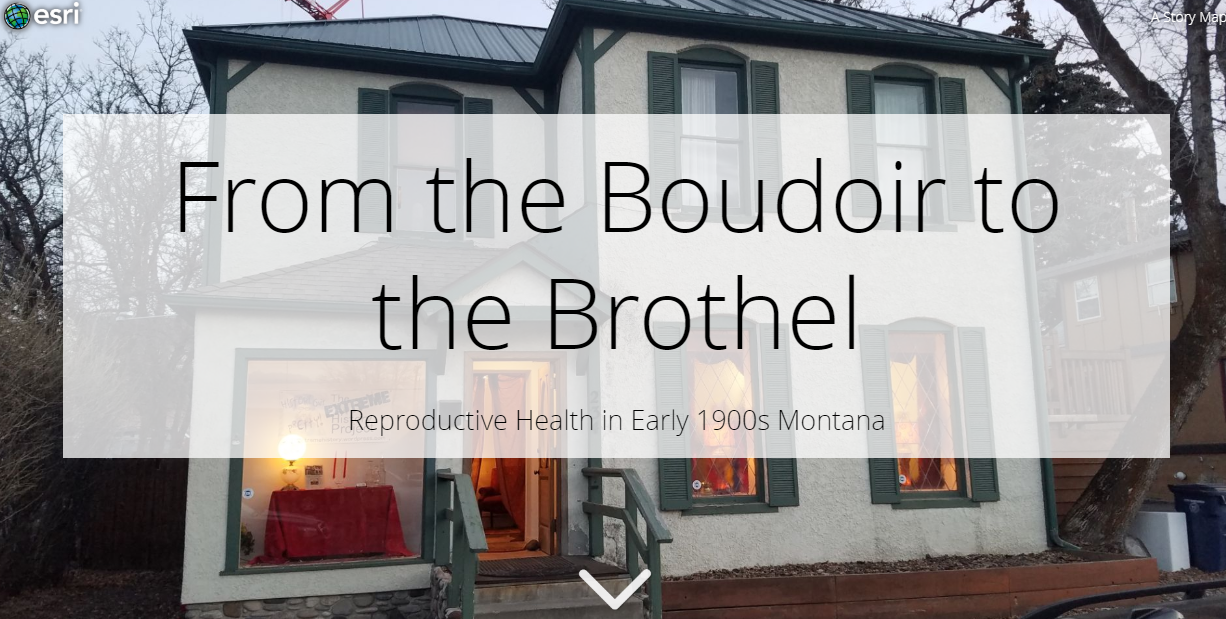
We are excited to announce that The Extreme History Project has a new pop-up exhibit, “From Boudoir to the Brothel: Reproductive Health in 1900’s Montana” now on display! This exhibit showcases the history of women’s reproductive healthcare in Montana through the lens of two women who lived in Bozeman, MT during the late 19th and early 20th centuries, Rachel Lindley and Libbie Hayes. Lindley was a member of Bozeman’s social elite and Hayes managed a house of prostitution. Jennifer Hill PhD, the Director of the Women’s Reproductive History Alliance curated the exhibit and is an expert in the field of women’s reproductive history and a pioneer in the field of digital humanities. To view the exhibit visit The Extreme History Project at 234 E. Mendenhall Street in Bozeman, MT or visit the virtual exhibit by clicking below. Extreme History is open on Thursdays and Fridays from 10am to 3pm. This exhibit will be on display for the remainder of 2020 and into 2021.
On August 26, 2020 we commemorate the 100th anniversary of the 19th Amendment to the United States Constitution. This amendment prohibits the states and the federal government from denying the right to vote to citizens of the United States on the basis of sex.
In Montana, men voted in favor of equal suffrage on November 3, 1914. But nationally, many women had to wait until the passing of the 19th Amendment to have the vote. For more on the Montana suffrage story, click here.
At The Extreme History Project, we have partnered with many other local organizations to commemorate this important anniversary. The group, which is called, “The 19th Amendment: Expanding the Arc of the Suffrage Story” is a coordinated effort of individuals and organizations in the Gallatin Valley, Montana who are working to change the narrative of women’s suffrage. We recognize that the fight for women’s voting rights, culminating with the 19th Amendment, was a key achievement for white women’s rights, but we also recognize that many indigenous women and women of color were excluded from both the process and the outcomes of the fights for suffrage. We are committed to using this anniversary as an opportunity to include these voices and their stories of suffrage, or lack thereof, and to highlight the continued threats to women’s rights today. To follow this groups events, please like the Facebook page by clicking here.
In commemoration of the 19th Amendment anniversary we are raffling off a “Suffragist Quilt” made by Extreme History volunteer, Susan Sewell. The quilt will be raffled on August 26, 2020. The colors and design of the quilt are based on the sashes worn by suffragists over their white dresses during parades, meetings, and protests. “Purple is the color of loyalty, constancy to purpose, unswerving steadfastness to a cause. White, the emblem of purity, symbolizes the quality of our purpose; and gold, the color of light and life, is as the torch that guides our purpose, pure and unswerving.” The quilt is approximately 60 x 72 inches, the material is 100% cotton batiks. It is Machine washable & dryable (warm/cool water, delicate cycle suggested). It will “pucker” when washed and dried – that is an attribute of quilts, not a defect. The quilt pattern is called Rail Fence or Split Rail Fence. A very traditional quilt pattern. This is a unique Montana-made piece that commemorates a significant historical event. Its beauty will bring you joy and warmth on cold winter nights as you remember the women who worked hard to achieve the national vote for women. Raffle tickets are $5 each or 5 tickets for $20. You can purchase raffle tickets at Extreme History headquarters (234 E. Mendenhall in Bozeman which is open on Thursdays and Fridays from 10am to 3pm) or you can put a check in the mail to us at P.O. Box 5019, Bozeman, MT 59717. Or you can venmo us at @ExtremeHistoryProject. Proceeds from the raffle tickets will go to educational events on women’s history.
Watch The Extreme History Project Facebook page for more upcoming events and opportunities to commemorate this important anniversary year!
For a recap of this important fight for suffrage watch The Vote on PBS. Here is a link to Part 1 and Part 2.











 In commemoration of the 19th Amendment anniversary we are raffling off a “Suffragist Quilt” made by Extreme History volunteer, Susan Sewell. The quilt will be raffled on August 26, 2020. The colors and design of the quilt are based on the sashes worn by suffragists over their white dresses during parades, meetings, and protests. “Purple is the color of loyalty, constancy to purpose, unswerving steadfastness to a cause. White, the emblem of purity, symbolizes the quality of our purpose; and gold, the color of light and life, is as the torch that guides our purpose, pure and unswerving.” The quilt is approximately 60 x 72 inches, the material is 100% cotton batiks. It is Machine washable & dryable (warm/cool water, delicate cycle suggested). It will “pucker” when washed and dried – that is an attribute of quilts, not a defect. The quilt pattern is called Rail Fence or Split Rail Fence. A very traditional quilt pattern. This is a unique Montana-made piece that commemorates a significant historical event.
 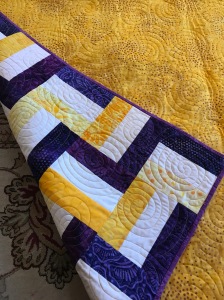 Its beauty will bring you joy and warmth on cold winter nights as you remember the women who worked hard to achieve the national vote for women. Raffle tickets are $5 each or 5 tickets for $20. You can purchase raffle tickets at Extreme History headquarters (234 E. Mendenhall in Bozeman which is open on Thursdays and Fridays from 10am to 3pm) or you can put a check in the mail to us at P.O. Box 5019, Bozeman, MT 59717. Or you can venmo us at @ExtremeHistoryProject. Proceeds from the raffle tickets will go to educational events on women’s history.
 The Extreme History Project